
The Setup That Almost Cost Us a Week of Production
Back in September 2022, I was handling a rush order for a packaging line upgrade. The customer needed a new drive for their conveyor system—nothing crazy, just a reliable way to move cartons at a steady speed. I'd read the specs: 4.2 horsepower, 1750 RPM input, output around 60 RPM. Straightforward, right?
My initial thought was: Bonfiglioli right angle gearbox. Why? Because that's what I'd used on a similar project six months prior—a tight-fit machine where space was at a premium. The right angle design saved inches, and the install went smoothly. So when this new conveyor job came in, I didn't think twice. I ordered a Bonfiglioli right angle gearbox, matched it with a VFD (how VFD control motor speed works was becoming second nature to me by then), and got on with my day.
Spoiler: that gearbox was absolutely wrong for this application.
The Moment I Realized Something Was Off
The gearbox arrived, and we mounted it. The installer fired it up, and within 20 minutes, the housing was hot—not warm, but hot. Surface temp reading: 160°F on a 75°F day. The vibration was also worse than expected, and I could hear a slight whine. I told myself it'd break in after a few hours.
Spoiler: it didn't.
After eight hours of runtime, the gearbox was still running hot, and the motor was drawing 15% more current than spec. The customer called me: "What did you give us? This thing sounds like a coffee grinder."
That's when I had one of those stomach-drop moments. I went back to the original machine layout drawings and compared them to the conveyor's actual path. The conveyor was a straight, 40-foot line. There were no corners, no tight turns, no space constraints. The right angle gearbox added an unnecessary 90-degree turn in the power flow for zero benefit. Worse, that extra 90-degree loss (generally 2-3% efficiency hit vs an inline reducer) was adding heat and load.
I'd picked the right gearbox for the wrong machine.
I called Bonfiglioli tech support the next morning. The engineer on the line asked two questions: "What's your load type?" and "Is the layout straight?". When I answered "uniform, continuous" and "yes, straight line," he said: "You need an inline gear reducer. Right angle boxes are for when you need to change direction. In this case, you're just adding a parasitic loss."
He then walked me through the math: for a straight-line conveyor running 16 hours a day, the efficiency difference between a right angle worm and an inline helical was roughly 4%—which translates to about 0.17 kW of waste heat. Over a year, that's nearly 1500 kWh of electricity down the drain, plus accelerated oil degradation from the higher temperature. I'd never considered that. I was so focused on the "it worked before" shortcut that I ignored the fundamentals.
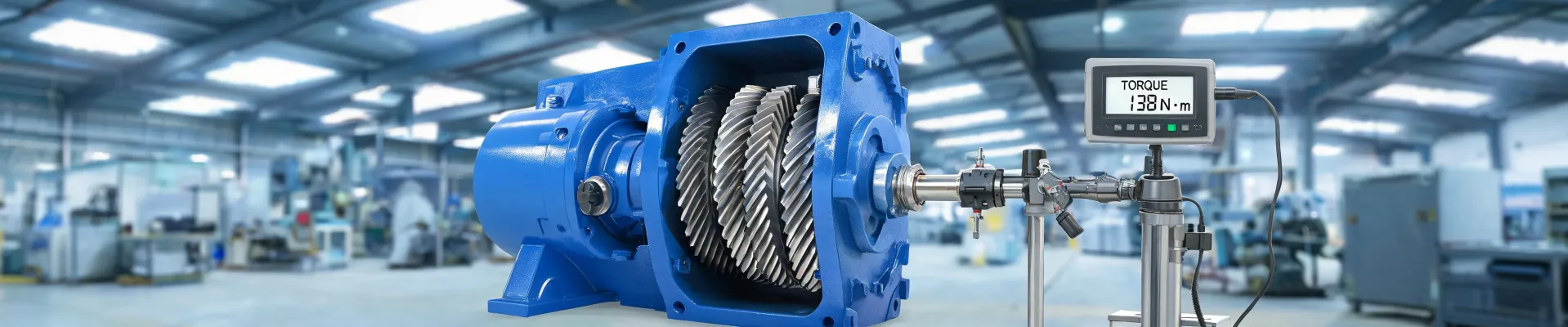
So we swapped it out. The replacement was a Bonfiglioli inline helical reducer—part of their A series, if memory serves. Same motor, same VFD settings, same ratio. The difference was night and day: 50°F cooler, whisper-quiet, and the amps dropped right to spec.
What I Wish Someone Had Told Me About Right Angle vs Inline Gearboxes
After this experience, I built a simple checklist for myself—and now for our entire procurement team. Here's what I'd tell anyone looking at a Bonfiglioli right angle gearbox, inline reducer, or bevel gear setup:
- Right angle is for direction changes, not for saving space by default. If your application is a straight line, start with an inline reducer. Only go right angle when you're literally turning a corner.
- Efficiency matters more at lower speeds. Inline helical reducers typically run 95-97% efficiency per stage. Right angle worm drives drop to 70-90% depending on ratio. For continuous duty (like conveyor or packaging lines), that difference adds up fast—both in electricity and cooling costs.
- Size isn't the only variable. A right angle gearbox may save you inches in one dimension, but it adds complexity in others (mounting orientation, oil level, cooling). For a straight conveyor, the inline reducer is simpler and more robust.
- How VFD control motor speed works: With a VFD, you can fine-tune the output speed of either gearbox type. The VFD doesn't care which gearbox you use. But the gearbox does care about the motor's torque and speed range. A right angle worm gearbox is more sensitive to heat at low RPM (due to sliding friction), while an inline helical handles lower speeds better. So if you're using a VFD to run the system at 30% speed for long periods, the inline reducer is the safer bet.
The Bottom Line
That mistake cost us $3,200—$890 for the rush shipping, $450 in labor for the swap, and the rest in wasted gearbox cost plus a 1-week delay for the customer. Plus the embarrassment of explaining to a client why their new drive sounded like a dying fan.
But honestly? I'm kinda glad it happened. Because now I know—and our whole team knows—that you can't pick a gearbox based on what worked last time. You have to look at the actual layout, the duty cycle, the efficiency curve. And if in doubt, call tech support before ordering, not after.
So, if you're speccing a drive system today: start with the load path. If it's straight, go inline. If you need a corner, consider a Bonfiglioli right angle. And always, always check the efficiency data against your runtime. Trust me on this one—your gearbox (and your customer) will thank you.