
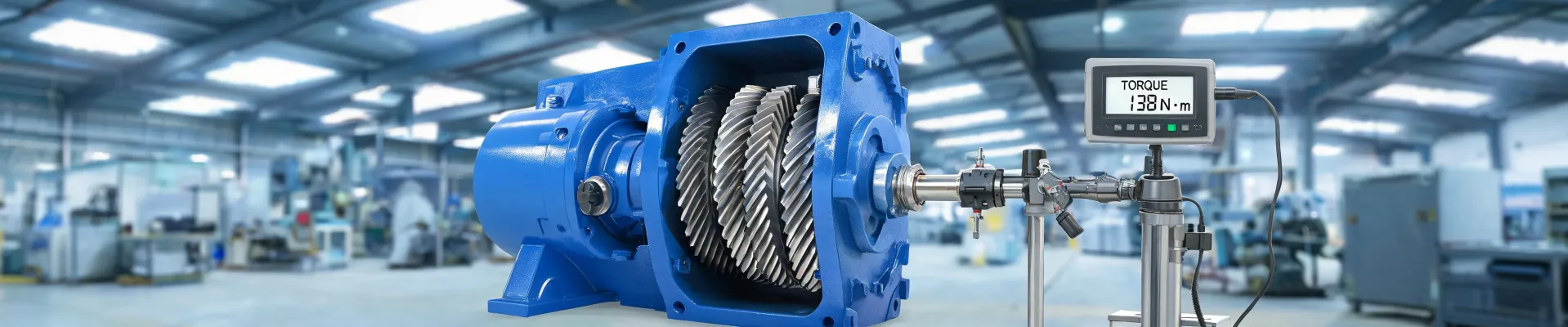
I coordinate emergency repairs and parts replacement for an industrial gearbox supplier in Illinois. In my 11 years here, I've processed over 200 rush orders — maybe closer to 180 if you check the system, but the point is, I've seen what goes wrong. What I've learned is that there's no single best way to buy bonfiglioli gearbox parts or choose a gearbox type. There are really three different situations, and each calls for a different approach. I'll walk you through each one so you can figure out which applies to you.
Quick overview of the three scenarios:
- Production is down now. The line is stopped, output is dying, and the cost of every idle hour is stacking up.
- Planned maintenance. You have days or weeks of runway. Performance matters more than speed.
- New project design. No production pressure. Your decision locks in costs and reliability for years.
Scenario 1: The Line Is Down — How to Get bonfiglioli Gearbox Parts Fast Without Getting Burned
In March 2024, a food processing plant in Ohio called at 2:00 PM on a Friday. Their finished product conveyor had stopped dead. The gearbox — a bonfiglioli planetary unit — had seized. The maintenance manager told me the line was already down four hours, and every hour cost them roughly $12,000 in lost output. Standard lead time for that model: 12–15 business days from Italy. They needed it running by Sunday night.
So first, the rule I always apply in this scenario: never start with a custom configuration. I know custom sounds attractive — you get exactly what you want — but when the plant is down, you don't have three weeks for a factory build. In that March case, the client's first ask was for a modified version of the standard unit. I had to talk them out of it. The modification would have meant a factory order from Italy, lead time three weeks. Not an option. We sourced a standard bonfiglioli gearbox from a distributor's stock in Wisconsin, paid $580 extra in overnight freight, and had it on a truck by Saturday morning.
Second, check the internals — especially ball bearings. (A ball bearing, in case the term doesn't come up often, is the component that supports the rotating shaft inside the gearbox. It lets the shaft spin with minimal friction. When a gearbox fails, the bearings are often the first to go; they take the brunt of misalignment, overload, and contamination.) If you're fitting a used or refurbished unit, ask the seller what brand of bearings are inside. In that Ohio case, we verified the replacement unit had C3-grade bearings and fresh seals. That's a 30-second question that can save you from a repeat failure.
Third — and this runs counter to what a lot of people do in a panic — don't skip inspection when you're in a hurry. One of my biggest regrets from early in my career: rushing a so-called refurbished unit into service because the delivery deadline mattered more than condition. It lasted six weeks before the bearing race spalled. I still kick myself for that one. If I'd spent ten minutes checking the bearing and seal condition, I'd have caught the issue before installation. The client's line went down a second time, and their operations manager started questioning every recommendation we made after that. A quick bearing check at the door takes ten minutes. Replacing a failed gearbox takes ten hours. Choose which one you'd rather have.
I should add a note here on cost, because everyone asks: bonfiglioli gearbox prices for this kind of standard planetary unit run roughly $2,800 to $5,200 depending on ratio and frame size, based on quotes we collected from three US distributors in January 2025. The Ohio plant paid $4,200 for the gearbox, $580 in freight, and $1,350 for our team's weekend labor. Total: $6,130. The alternative — waiting for the factory build — would have meant a $50,000+ penalty from the client's retail customer. (To be fair, the client paid a premium for stock availability. Buying directly from bonfiglioli's Italian plant would have been cheaper, but you lose at least 10–14 days to transit and customs.)
Scenario 2: Planned Maintenance — Get It Right, Not Just Quick
This is the situation where you have some runway: a scheduled shutdown in two weeks, a spare that's getting worn, a gearbox that's making noises but hasn't failed yet. You have time to make a deliberate choice, and the choice should lean toward reliability over cost savings.
Rule one: buy OEM parts whenever possible. By that I mean parts manufactured to bonfiglioli's original spec, not necessarily through bonfiglioli itself — an authorized distributor is fine. What I advise against is the cheap non-OEM gearbox parts you'll find on marketplaces. I've tested some of those. The gear teeth pass visual inspection, but the hardness is inconsistent and the bearing clearance tolerance is usually far off spec. On a machine that runs 16 hours a day, the non-OEM part might last six months; the OEM part lasts three years. Over time, "saving" 35% on the part costs you double in labor and downtime.
Rule two: verify every spec before you order. This is the part where I confess a real mistake of mine. Two years ago, I placed a rush order for a bonfiglioli worm gear motor without double-checking the ratio stamped on the old unit. I assumed it was 20:1 based on the part number in the client's email — turned out the actual unit had been fitted with a 25:1 configuration during a previous rebuild. The replacement ran, but at the wrong output speed. The client's conveyor ran too fast and jammed. They had to shut down for another two hours while we sourced the correct inner gear set. If I'd spent five minutes getting the serial number and reading the nameplate, I'd have caught it. (Should mention: the bonfiglioli nameplate includes model, ratio, and serial — you can usually decode the full configuration from that alone.)
Rule three, and this connects to something broader about brand perception: what you install impacts how your customers see you. I've seen this repeatedly — when you put a rebuilt or substandard part into a machine, the end customer doesn't blame the part. They blame the equipment. They blame the production line. They blame the company that maintains it. A $300 cost saving on a gearbox component can translate into a contract extension lost. In one of my client's factories, they installed a cheap replacement gearbox in a packaging line, and the noise levels increased noticeably within a month. Their plant manager happened to walk through with a visiting customer that week. The visitor asked if the machine was on its way out. That's a conversation you never want to have.
At this point, a word on special configurations: if you're replacing a unit with 5th gear motors — a configuration where an additional gear stage is added to reach very low output speeds while keeping the motor compact — be extra careful with ratio identification. These units have two or more ratio stages, and the total is not always obvious from the motor nameplate. I've seen a poor guy order a replacement for a 5th gear motor and receive a single-stage unit because he only cross-referenced the motor housing part. The gearbox ratio had nothing to do with the motor part number. Always decode the full ratio chain.
For planned maintenance, a reasonable budget check: bonfiglioli worm gear motor replacements in the 1.1–2.2 kW range typically run $1,100 to $1,800 for OEM-equivalent parts at January 2025 pricing. Verify current rates — those numbers shift with steel prices and freight costs.
Scenario 3: New Project Design — Choose for the Life of the Asset
This is the fun one. No line is down, no deadline is looming, and you get to make decisions that will affect maintenance and uptime for the next decade. This is also where I see the most avoidable mistakes.
First, an anti-recommendation: don't over-spec the gearbox just to feel safe. I know that sounds strange coming from someone who just argued for quality, but here's what happens: a new project feels uncertain, so the design engineer picks a gearbox with a service factor of 2.5 when the application really needs 1.5. The oversized gearbox costs twice as much, takes up more space, and — here's the kicker — runs at lower efficiency because it's loaded well below its optimal range. A gearbox that's massively oversized wastes energy every single hour it runs. Granted, some safety margin is smart. But a 25% safety factor and a 150% safety factor are very different. Use the actual duty cycle, get the service factor right, and spend the saved money on better sealing or a more robust bearing package instead.
Second — if you're looking at compact motion control options, understanding where mini servo motors fit is critical. A mini servo motor is a small servo motor — typically under 750W — designed for high-precision, high-dynamic positioning in tight spaces. They're used everywhere in pick-and-place machines, packaging lanes, and automated assembly equipment. They're excellent when you need speed and precision. They're the wrong choice when you need brute torque at low speed — that's what a gear motor is for.
When I'm sizing a mini servo motor with a gearbox, I check three numbers:
- Inertia ratio. Keep it below 10:1 for stable control — many servo suppliers recommend 4:1 to 8:1 for tight settling times. Ignore this and you'll spend weeks fighting tuning issues.
- Feedback type. Absolute encoders are worth the extra cost for multi-axis machines; they keep position after power loss. Incremental encoders reset on every power-up, which can cause re-homing downtime.
- Brake holding torque. If the axis is vertical, the brake holds the load when the motor is off. Get this wrong and the axis will drop as soon as the machine powers down.
Also, pay attention to the bearing sizing inside the gearbox for servo applications. Servo motors reverse direction frequently, and that hammers rolling-element bearings — ball bearings included — much harder than constant one-way rotation does. So choose the gearbox with appropriately rated bearings, not just the cheapest frame size that fits.
Third, think about the maintenance path years from now. I once specced a gearbox for a customer's machine where the manufacturer used a non-standard bearing bore on the output shaft. Custom bearing, custom seal, custom everything — and that meant a two-week lead time and triple the cost whenever a bearing needed replacing. The customer called me in a panic two years later, asking for help finding the part from anywhere. That was a bad decision on my part, and I learned the lesson. For any new build, I now ask two questions: “If this gearbox fails, can we get parts in 48 hours?” and “Are the key components standard catalog items?” If the answer to either is no, we go back to the drawing board.
So glad I caught this one early in the design phase once — we came within a week of committing to a non-standard right-angle gearbox for a packaging line. If we'd gone through with it, the customer would have been tied to that vendor's replacement parts for the life of the machine.
How to Tell Which Scenario You're In
It sounds obvious, but getting the scenario wrong is exactly how people make costly mistakes. I've seen someone apply the "production is down" emergency playbook to a routine maintenance job and pay $600 extra in expedited freight for no reason. And I've seen the reverse: treating a genuine line-down emergency like a planned project and waiting two weeks to save $300. So here are the three questions that decide which approach to take:
1. Is the production line currently stopped?
If yes, you're in Scenario 1. Act accordingly: prioritize availability, accept a higher price, skip customization, and do a thorough incoming inspection.
2. Do you have at least 7-10 days before the gearbox is actually needed?
If yes, you're in Scenario 2. Use the time to verify specs, buy OEM parts, and build a relationship with a supplier who can decode the nameplate correctly.
3. Are you designing something new that will be built or ordered in the future?
If yes, you're in Scenario 3. Don't rush. Think about the total lifecycle, not just the first purchase price. Avoid over-specification, pay attention to servo-gearbox matching, and keep maintenance parts standard.
To be honest, a lot of the breakdown calls I get could have been avoided by a better decision in Scenario 3. But when the line is already down, that's water under the bridge — get the standard part, check the bearings, and get back to production. When you have time, the right parts and careful verification are worth every penny.
If you're not sure which scenario fits, call a gearbox distributor and ask them to check availability and lead times on the exact model before you decide. That phone call often makes the answer clear.