
-
The Framework: What I Judge Every Emergency Sourcing Decision By
-
Dimension 1: Raw Speed vs. Verified Availability
-
Dimension 2: Sticker Price vs. Downtime Cost
-
Dimension 3: "Compatible" vs. Engineered Fit
-
Dimension 4: Support When Things Go Wrong
-
When to Choose What (and I Don't Always Say "Bonfiglioli")
It's 2:37 AM on a Tuesday. A packaging line is down. The gearmotor feeding the conveyor just seized, and the smell of burnt enamel is already spreading through the plant. Someone's standing in front of the control cabinet, phone in hand, Googling "gearbox bonfiglioli." The production manager is asking, "Can we get any gearbox here by morning?"
That's the moment where you either save the week or turn a breakdown into a disaster. And I've been on both sides of that call.
In my role coordinating emergency component sourcing for manufacturing plants, I've handled 200+ rush orders in the last 8 years—from a $200 coupling to a $15,000 servo reducer delivered in 36 hours. I don't sell gearboxes. I make sure the right one shows up on time. And I've watched people make the same mistake over and over when the pressure hits.
When a motor or gearbox fails, you'll weigh two paths. One is the "whatever's available" route: closest supplier, any equivalent brand, fastest shipping, figure out the rest later. The other is what I call the "engineered certainty" route: get the right specification—a bonfiglioli gearmotor, properly sized—verify the lead time, and pay for guaranteed delivery.
Here's how those two approaches compare when hours actually matter.
The Framework: What I Judge Every Emergency Sourcing Decision By
In the middle of a breakdown, it's tempting to just grab the first lead you find. Over the years, I've narrowed my judgment down to four criteria. If a sourcing option doesn't pass these, it's not worth the paper the quote is printed on:
- Speed — actual arrival time, not quoted arrival time
- Certainty — can the supplier prove it'll be there, or are they guessing?
- Total cost — the part, the downtime, the rework, and the repeat-failure probability
- Engineering fit — will it work in your application, both now and six months from now
These four criteria rarely agree with each other. That's the whole problem. Let me walk you through each one.
Dimension 1: Raw Speed vs. Verified Availability
From the outside, the fastest way to replace a failed gearbox is to find whoever has one in stock within a 100-mile radius. The reality is that "in stock" and "available" are two very different things.
I've seen a "same-day" gearbox turn out to have the wrong shaft diameter. I've seen a "universal replacement" motor that shared the same footprint but had a different mounting flange—bolts lined up perfectly, torque rating didn't. That's the surface illusion at work: it looks fast, but it introduces rework loops you can't control.
In contrast, when we've ordered a bonfiglioli gearmotor through an authorized channel, the supplier could pull the exact spec, check distribution stock, and confirm dimension sheets before anything shipped. That verification takes a couple hours, not a couple days. And it's the difference between "it should fit" and "it's confirmed to fit."
Here's what surprised me early in my career: in about 30% of rush orders, the "slower" route—calling the OEM or an authorized distributor, getting the right part confirmed—arrived faster than grabbing something local. Because the local option often required adapter plates, shaft modifications, or a second order after the first one didn't fit.
Verdict: Verified availability beats raw stock status every time. A gearbox that's "sort of" available is not a fast option—it's a second emergency waiting to happen.
Dimension 2: Sticker Price vs. Downtime Cost
A generic AC motor might cost $400. A properly specified bonfiglioli gearmotor might cost $1,200. On a spreadsheet, the generic wins. On a production floor, that comparison is misleading—sometimes dangerously so.
Concrete example. In March 2024, a food processing client called at 11 AM with a seized conveyor gearmotor. Their line was down, and every hour was costing about $4,800 in unproduced product. They had two quotes: a generic replacement from a local electric motor shop—$650, delivery promised in 48 hours (which, honestly, was optimistic given they needed to order the part from their own supplier)—and a bonfiglioli gearmotor from a regional distributor—$1,150, guaranteed next-day delivery with a signed confirmation.
The production manager almost went with the $650 option. I didn't argue with the price. I did the math out loud with him. The generic option had a 48-hour lead time, plus installation time on top. The bonfiglioli would be there in 18 hours. The time difference was worth roughly $144,000 of avoided downtime. The $500 price difference? Noise.
That's the time certainty premium in its purest form. In an emergency, you're not buying a gearbox. You're buying your line back. An uncertain delivery date isn't a discount—it's a gamble with your client's product commitments.
I'll give you the other side too, though, because I'm not here to sell you a brand. If the component is a safety spare that might never get installed, or if your downtime costs are genuinely low, the cheaper generic is a reasonable choice. Certainty only has value when being wrong actually costs you something.
Verdict: When downtime exceeds the price difference—and it usually does—paying for certainty ends up being the cheaper option. Run the numbers before you assume the quote with more zeros is just a luxury.
Dimension 3: "Compatible" vs. Engineered Fit
This is where the most painful failures happen. And it's worth clearing up some basics, because a lot of the people who end up in emergency sourcing situations are searching things like "what's a vfd" or "small servo motor" and trying to make sense of a system that's suddenly not working.
An AC motor runs at a speed tied to line frequency. A VFD—variable frequency drive—changes that frequency to control the motor's speed. It's not an on/off switch; it's continuous speed control. A servo motor goes further: it's a closed-loop system where the drive constantly compares actual position to commanded position and corrects the difference. These three technologies are not interchangeable, even when the shafts happen to be the same diameter.
The most frustrating part of this job is watching a plant burn 48 hours on a "compatible" replacement that doesn't perform because nobody verified the duty cycle, the gear ratio, or the inertia match. You'd think written specs would prevent these errors. But interpretation varies wildly between suppliers, especially under time pressure.
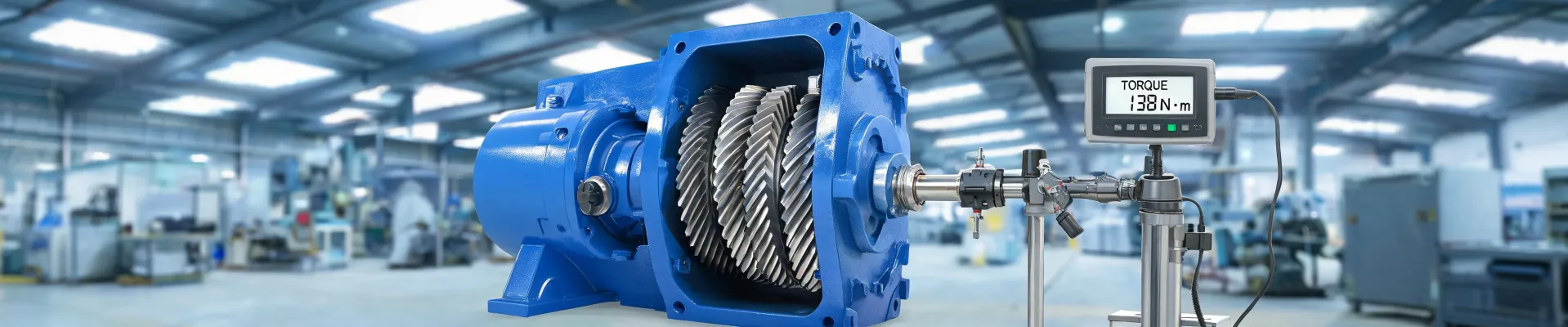
A bonfiglioli gearbox, for example, has a torque rating that shifts based on service class—whether it runs 8 hours a day or 24, steady load or shock load. Two gearboxes that look identical from outside can have completely different ratings inside. When you buy an engineered product, you're not just buying the cast iron housing. You're buying the guarantee that rated torque applies to your actual application.
Small servo motors take this to another level. Servo drives are tuned to their motor's electrical characteristics. An "equivalent" servo motor from another brand can look right on paper and then produce oscillation, vibration, or fault codes, because the inductance and torque constants don't match what the drive's firmware expects. I've seen this cost a client an entire weekend of production.
Verdict: "Compatible" means something on paper. "Engineered fit" means something on the floor. In an emergency, you need the latter.
Dimension 4: Support When Things Go Wrong
The fourth dimension is the one nobody thinks about at 2 AM, but everyone thinks about two weeks later. What happens if the part arrives and doesn't work?
With a generic supplier, you get a phone number that may or may not lead to a human who knows what a gearmotor is. With a bonfiglioli purchase, you get a company with engineering support, repair services, spare parts, and documentation—catalog PDFs, dimension drawings, installation manuals. When someone searches "bonfiglioli" at 2 AM, that's what they're looking for: a name that represents a verifiable standard.
I've called a manufacturer at 6 PM on a Friday, with a client's line down, and gotten a service engineer who walked us through a repair procedure over the phone. I've also spent a weekend sending emails to a generic supplier's sales address and gotten "out of office" replies. Guess which one saved the client's contract.
According to NEMA MG1, motor frame dimensions are standardized so that replacements are physically interchangeable. That's true. But "interchangeable" refers to bolt patterns and shaft heights, not performance, efficiency, or longevity. And IEC 60034-30-1 efficiency classes—IE2, IE3, IE4—tell you something about energy consumption, but only if the supplier actually certifies the class. A spec sheet that doesn't cite these standards is just describing a hunk of metal.
Verdict: Documentation and support aren't extras. They're part of the product. In an emergency, they're the difference between a fix and a mystery.
When to Choose What (and I Don't Always Say "Bonfiglioli")
If you've read this far, you might expect me to say "always buy the engineered option." I don't. That would be lazy thinking, and it would also be wrong.
Choose the "whatever's available" route when:
- You need a stopgap to get a line moving, and the correct replacement is already on order.
- The application is non-critical and downtime costs are low.
- You're buying a safety spare that might never be installed.
- You fully understand the spec risk and you're prepared to eat the cost if it fails.
Choose engineered certainty when:
- Downtime costs more than the price difference (run the math—you'll be surprised how often this is the case).
- The application is critical or has demanding duty-cycle requirements.
- You need VFD compatibility or servo matching that depends on precise specifications.
- You want documentation, support, and the confidence that you won't deal with this same failure next month.
This is the honest takeaway from 200+ emergency orders. When hours matter, the line between "probably fine" and "confirmed correct" is the line between a manageable incident and a catastrophe. The premium you pay for a bonfiglioli gearbox—or any properly engineered, fully specified component—isn't the cost of a brand. It's the cost of certainty. And certainty, at the moment your line is down, is the most cost-effective thing you can buy.
Next time someone says, "can't we just get any gearbox?" do the math. Count the hours. Count the rework risk. Count the second failure. Then decide what certainty is worth to you.
Or better—do that calculation now, before the emergency happens. Grab a coffee, pull up the bonfiglioli catalog PDF, and identify your critical drives. Know the exact part number before you need it. Because the best emergency is the one you've already prepared for.