
What This Comparison Is
I review motion components before they reach customers. Over the last four years, that has meant checking roughly 200+ unique items a year: gearmotors, gearboxes, driver boards, even the occasional stepper motor. In Q1 2024 I rejected a batch because the nameplates didn't match the serial records. That kind of detail is why this article exists.
I'm often asked which is better: a Bonfiglioli gearmotor or a DIY stepper setup using an A4988 stepper motor driver. It's the wrong question, honestly. The better question: which one fits your actual speed, torque, and maintenance constraints? This piece compares both options on the things that actually break machines.
The Comparison Framework
We're comparing two routes to the same general goal: controlled rotary motion.
- Option A: A Bonfiglioli gearmotor—an integrated motor and reducer, sized and documented by one manufacturer.
- Option B: A do-it-yourself motion axis with a stepper motor, an A4988 driver board, a power supply, and probably a separate gearbox. That gearbox often uses spur gears to get the speed down.
I'll compare them on torque and mechanical behavior, speed control (including VFD vs. microstepping), total cost, and—critically—repairability. Why compare these two? Because I keep seeing the same decision in small-machine design: 'Do I buy a proper gearmotor, or build something cheaper with a stepper and an A4988?' There's no universal answer. But there are clear conditions.
Torque and Mechanical Behavior: The Part Nobody Wants to Check
A stepper motor datasheet usually highlights holding torque. That's the torque with the shaft stopped and current applied. Once the motor starts moving, the available torque drops. The A4988's current limit also affects this. If you set the current too low, you may have no low-speed torque. Too high, and the motor can overheat. A separate gearbox with spur gears reduces output speed and boosts torque, but it adds backlash and mechanical noise.
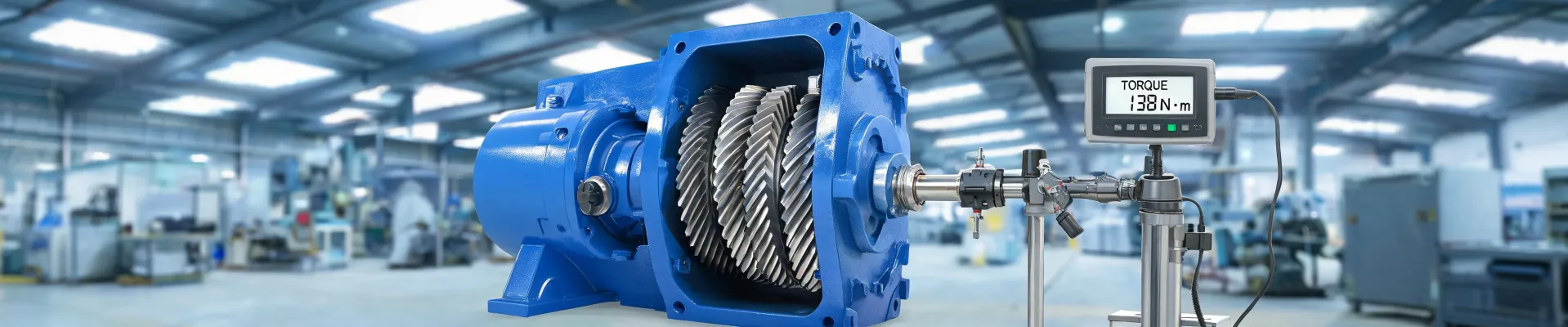
An integrated Bonfiglioli gearmotor is designed the other way: the complete motor and reducer combination is rated for continuous torque based on a service factor. That's not a marketing number. In our inspection process, we verify actual motor current, vibration, and gearbox temperature under load. A gearmotor that's correctly sized stays quiet. A stepper that's under-sized stalls or loses position.
Honestly, I'm not sure why so many engineers look at holding torque and ignore the torque-speed curve. My best guess is that the headline number is easier to compare. But the curve is what your machine actually feels.
Conclusion: For sustained low-speed torque, the gearmotor wins. For short, light moves, the A4988 setup can be the right call.
Speed Control: How VFD Control Motor Speed vs. A4988 Microstepping
If you've ever asked how VFD control motor speed works, here's the plain-language version. A VFD changes the speed of an AC motor by changing both frequency and voltage. For a standard induction motor, the relationship is roughly: synchronous speed = 120 x frequency / number of poles. If the gearbox on your Bonfiglioli gearmotor has, say, a 20:1 ratio, the output speed is motor speed divided by 20. The VFD keeps voltage and frequency in balance so the motor doesn't overheat at low speed.
An A4988 stepper motor driver works differently. It sends current pulses to the stepper in a sequence. The faster the step rate, the faster the motor turns. Microstepping divides each full step into fractions like 1/8 or 1/16, which makes the motion smoother. But the A4988 doesn't know if the shaft actually moved. There is no encoder feedback in a basic open-loop setup.
Why does this matter? Because if you need closed-loop speed holding under changing load, a VFD-fed gearmotor has a strong advantage. If you need repeatable indexing over a short range, an A4988 with a stepper is usually good enough.
The old belief that A4988 boards are only for hobby 3D printers comes from an era when driver boards had weak current limiters and poor heatsinking. Modern A4988 boards can run a NEMA 17 surprisingly well. But 'surprisingly well' is not the same as 'continuous industrial duty.'
Conclusion: For continuous industrial speed control, VFD plus gearmotor is the cleaner answer. For indexing and positioning at light loads, A4988 microstepping is simpler and cheaper.
Total Cost, Repairs, and Bonfiglioli Gearbox Parts
Here's where the A4988 looks amazing on paper. The component prices are low, often deceptively low. But the basics don't include a controller, enclosure, connectors, wiring, power supply, or a gearbox. If you need extra reduction, add a gearbox which costs its own thing. Then add your time for tuning. On a prototype, that's fine. On a production machine, time is not free.
An integrated gearmotor costs more upfront. But it saves engineering time and comes with proper documentation. If a unit fails after years of service, you order genuine Bonfiglioli gearbox parts and follow the repair manual. The same performance characteristics return. I've seen repairs where someone replaced a failed driver board with a 'compatible' one and had to re-tune the entire axis because the current sense voltage didn't match. That's the hidden cost of cheap parts.
I have mixed feelings about the low-cost route. On one hand, a quick board swap can be clever when the whole machine is a lab fixture. On the other, 'cheap to replace' often means 'fails often.' If the machine runs a production line, uptime is worth more than the part. (Note to self: write a separate post about spare-part verification, because I keep seeing the same mistake.)
Most buyers focus on the component price and completely miss setup costs, revision costs, and downtime. The question everyone asks is 'What does it cost?' The question they should ask is 'What does a failure cost?'
Conclusion: If repair parts need to be traceable, choose a system with genuine spare parts. If the consequence of failure is a skipped lab experiment, go with the A4988.
So Which One Should You Choose?
I recommend Bonfiglioli gearmotors for a large majority of industrial applications—but not for all. Here is the practical version.
Choose a Bonfiglioli gearmotor if:
- Your machine runs more than a few hours a day.
- The load is continuous or has heavy shock.
- Downtime means lost money.
- You need documented torque ratings, wiring diagrams, and spare part availability.
- You want the same product support years after installation.
Choose an A4988-based stepper setup if:
- You're prototyping or building one-off test equipment.
- The duty cycle is low.
- The load is light and well understood.
- You can accept open-loop positioning.
- Your maintenance plan is 'swap the board when it fails.'
If you need extra reduction in either system, don't ignore the gearbox. A simple gearbox with spur gears is cheap and efficient, but it has backlash and can whine. Helical or planetary stages are smoother and quieter, at a higher cost. Match the gearbox to the actual load and duty cycle, not to the lowest invoice.
This comparison was accurate as of early 2025. Driver board revisions, motor availability, and gearmotor series change, so verify current specifications before making a decision. I learned that lesson the hard way after specifying a spare part from memory in 2022. It happens.
There's something satisfying about a machine that just works, whether it's built on a $50 stepper kit or a production-grade Bonfiglioli gearmotor. My job is to catch the failures before you see them. If you're not sure which route to take, find the expected duty cycle, measure the real load, and then check how much a failure will cost. That answer almost chooses itself.