
Thursday, 2:14 AM. My phone lights up with a number I don't recognize. Nobody calls a service coordinator at 2 AM to chat about the weather.
"The palletizing line just stopped," the voice on the other end says. "Main drive gearbox seized. We've got 40,000 units to ship by Monday."
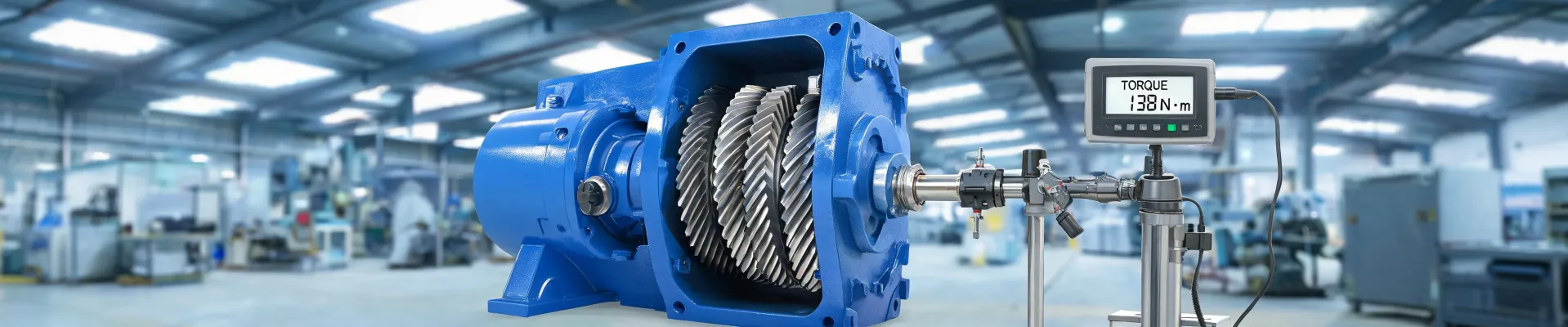
I was awake instantly, running worst-case math in my head. A seized gearbox isn't a part you grab from a local supply house. This one was a Bonfiglioli geared motor—solid Italian engineering, eight years of flawless service, and now dead as a doornail.
If you've ever had a production line go down, you know that sinking feeling. It's not just the machine. It's the missed deadlines, penalty clauses, overtime, and chaos that ripples through every department.
Who I Am (and How I Ended Up Here)
Quick intro: I'm a service coordinator at an industrial automation company in the Midwest. I've handled 200+ rush orders over the past four years, including same-day turnarounds for food & beverage plants, automotive suppliers, and logistics hubs. When a plant manager says "we're down," I know exactly what it costs them per hour.
This call came from a packaging facility outside Chicago. Their palletizing robot's main turntable was driven by a Bonfiglioli geared motor that had been running perfectly since 2017. Now it was locked up tight, and the line was dead.
Step One: Get the Documentation
The first thing I did was pull up the Bonfiglioli shop while the plant manager sent me the gearbox nameplate photo. Here's something this business has taught me: good documentation separates the pros from the chaos.
Bonfiglioli makes it genuinely easy. You can download the Bonfiglioli gearbox spare parts PDF straight from their website—every part number, every bearing size, every seal dimension, fully illustrated. Instead of waiting for our technician to disassemble the gearbox and measure parts, we knew exactly what to order within thirty minutes.
That PDF is a game-changer. (Honestly, I wish more manufacturers did this.) We ordered the complete bearing and seal kit, new gaskets, and a replacement input shaft before our tech even left the shop. Three-day delivery with expedited freight.
Bonfiglioli rates their gearboxes to AGMA and ISO standards, which means their published torque and service factors are conservative and verifiable. That engineering rigor shows up in the documentation too—which is exactly what you want when you're blind-ordering parts for a machine that's down.
The Temptation of Cheap
Then came the hard part.
The plant manager found a "compatible" gearbox online. One-third the price of the genuine Bonfiglioli kit. Available immediately, next-day delivery. It called to me in the way only a good deal can during a crisis.
The upside was clear: save about $3,000 and gain a full day of lead time. The risk was just as clear: an off-brand replacement that might not match the mounting dimensions, torque curve, or lifespan—and if it failed, the line would go down again on a worse timeline.
I kept asking myself: is $3,000 worth potentially losing this client?
Because that's the real cost. I've seen the aftermath of knock-off parts before. About three years ago, another client saved $500 on a "universal" gearbox for a conveyor drive. It worked for six weeks. Then the seals blew, the gears wore out, and the line stopped mid-shift. They ended up paying double labor, rush freight, and the genuine part anyway. (surprise, surprise.)
So I said no. We stayed with genuine Bonfiglioli parts from the official shop. $400 extra in expedited shipping? Sure. Hill to die on? Absolutely.
The plant manager wasn't thrilled about the price at first. But I told him: when you're staring at a Monday deadline and a $50,000 penalty clause, cheap is expensive. He didn't argue.
The Subplot: What's a Stepper Motor, Anyway?
While we waited for parts, the plant manager asked me to look at another issue. The same robot used a NEMA 23 stepper motor for its indexing table, and it had been losing position occasionally. Maybe once a shift, cases stacked crooked.
If you've ever wondered what's a stepper motor and why it matters, here's the short version:
A stepper motor is a brushless electric motor that moves in discrete steps. "NEMA 23" refers to frame size: a 2.3-inch (57 mm) square faceplate. Common versions do 200 full steps per revolution—1.8° per step. It's open-loop: the controller sends step and direction pulses and trusts the motor to comply. No encoder, no feedback, no fuss.
That simplicity makes steppers great for indexing and positioning. They're inexpensive, reliable, and precise enough for many applications. Key word: enough. When a NEMA 23 is properly sized, it just works.
But "properly sized" was exactly the problem. Over the years, the plant had added heavier tooling and payloads to the indexing table. The stepper was being pushed past its torque range, and under load it was silently losing steps. That's the classic stepper failure mode: no alarm, no warning, just subtle position drift.
I told the manager: if loads keep growing, consider a brushless DC servo motor.
A brushless DC servo motor is a different animal. It uses electronic commutation and—here's the key—closed-loop control with an encoder or resolver. The drive always knows the exact position and corrects errors in real time. That means higher torque at speed, faster acceleration, zero lost steps, and much better overall precision.
The trade-offs are real. Servo systems cost more, need more tuning, and require a more sophisticated drive. For a simple "rotate 90° and stop" job, a NEMA 23 stepper motor is often plenty. But when loads change and precision matters, servo is the no-brainer.
My recommendation surprised him a little: first, upgrade to a higher-torque NEMA 23 with a microstepping drive. That's the cheaper fix, and it probably solves 80% of the problem. If they plan to keep automating, skip the incremental step and go straight to the brushless DC servo motor.
He seemed relieved that I didn't just push the premium option. (Clients trust you when you tell them they don't need the expensive thing.)
The Parts Arrive
Friday morning, the Bonfiglioli delivery landed.
Our technician tore down the gearbox by noon. The old bearings were shot—one race had actually fragmented. That was the smoking gun: the gearbox hadn't failed from a design flaw; it failed from eight years of continuous duty.
I'm glad we waited for the genuine parts. An off-brand kit would've masked the symptoms, and we'd have been back on site in a few months. Instead, the rebuild went textbook: new bearings, seals, gaskets, fresh oil, backlash check—all to spec.
(Thankfully, the output shaft wasn't scored. That would have doubled the repair cost.)
By Saturday evening, the turntable was spinning smooth and quiet. By Monday, 40,000 units shipped on schedule.
What I'd Tell You If You Called Me at 2 AM
I have mixed feelings about how this industry handles emergency parts. On one hand, $400 for overnight freight on a bearing kit feels like price gouging. On the other hand, when a plant is losing $12,000 per hour in downtime, that $400 is the best investment they'll make all quarter.
But the deeper lesson, the one that stuck with me, is about quality perception.
When you open a genuine Bonfiglioli box, the part fits. Not eventually, not "close enough"—it fits the first time. The bearing seats properly. The seals align with the mating surfaces. The torque values in the manual actually match reality. That's not a luxury; it's what makes a production line predictable.
And predictability is what clients are really paying for.
I've watched companies try to save a few hundred dollars on "compatible" parts. Sometimes it works out. More often, it's a gamble with stakes they don't fully understand. In my experience, the cost of a failure is usually ten times the cost of the part you should have bought in the first place.
Here's my practical advice:
- Download the Bonfiglioli gearbox spare parts PDF for every gearbox you operate. Keep it in a shared folder. You'll need it at the worst possible time.
- Get familiar with the Bonfiglioli shop before the emergency happens. Knowing how to find parts in five minutes instead of an hour is worth a lot.
- Question your motor choices. A NEMA 23 stepper motor is a great, economical option for simple positioning. A brushless DC servo motor is the right call when speed, torque, and closed-loop reliability matter.
- And remember: quality isn't a line item. It's the reason machines run.
Bottom Line
That 2 AM call ended well—not because we got lucky, but because we made deliberate choices. We used the documentation, ordered genuine parts, and didn't let a short-term discount jeopardize a long-term relationship.
If you're on the fence about spending the extra money on genuine Bonfiglioli parts, or debating whether your NEMA 23 is enough, I get it. I've been there. Just do the math:
The $3,000 you save on a knock-off can cost you $50,000 in downtime. The NEMA 23 stepper motor that's "probably fine" is why your line drifts. And the brushless DC servo motor you're avoiding because it seems complex is exactly what your process needs as it grows.
I didn't learn any of this in training. I learned it one 2 AM phone call at a time.